
Abandoned places and former sites
Abandoned places and former sites: browse the archive’s case files, documented summaries, attributed claims, and source links. Listing is never permission to enter.
Camp Lockett site
⌖ Campo, California
Completed in December 1941, Camp Lockett in Campo was a cavalry post that housed the 10th and 28th Cavalry. African American mounted cavalry troops served here before their departure in 1944. That year, the camp was converted to a hospital, which operated until 1946. In 1950, former hospital buildings became Rancho Del Campo, later known as the Juvenile Ranch Facility. This reuse connected the former military post to a new chapter as a county juvenile facility. The ranch operated until August 2015, when it closed.
◯ General area onlyOpen case file →McKinley Mansion, Los Angeles
⌖ Los Angeles, California
Built in the 1910s, Los Angeles's McKinley Mansion had 20 rooms and 13,000 square feet of space. Maytor H. McKinley purchased the house in 1945. The city designated it a Historic-Cultural Monument on September 9, 1987. An aborted demolition attempt followed in 1988, according to contemporary Los Angeles Times reporting. On May 23, 1994, fire destroyed the mansion. Two people were found dead, one on the second floor and another in the attic. Their identities, the causes of their deaths and the cause of the fire were not immediately determined. By 1995, neighborhood groups were proposing a community center, housing and gardens for the former mansion site. These were plans, not completed projects. The Pacific Coast Architecture Database dates the final demolition to about 1995.
◯ General area onlyOpen case file →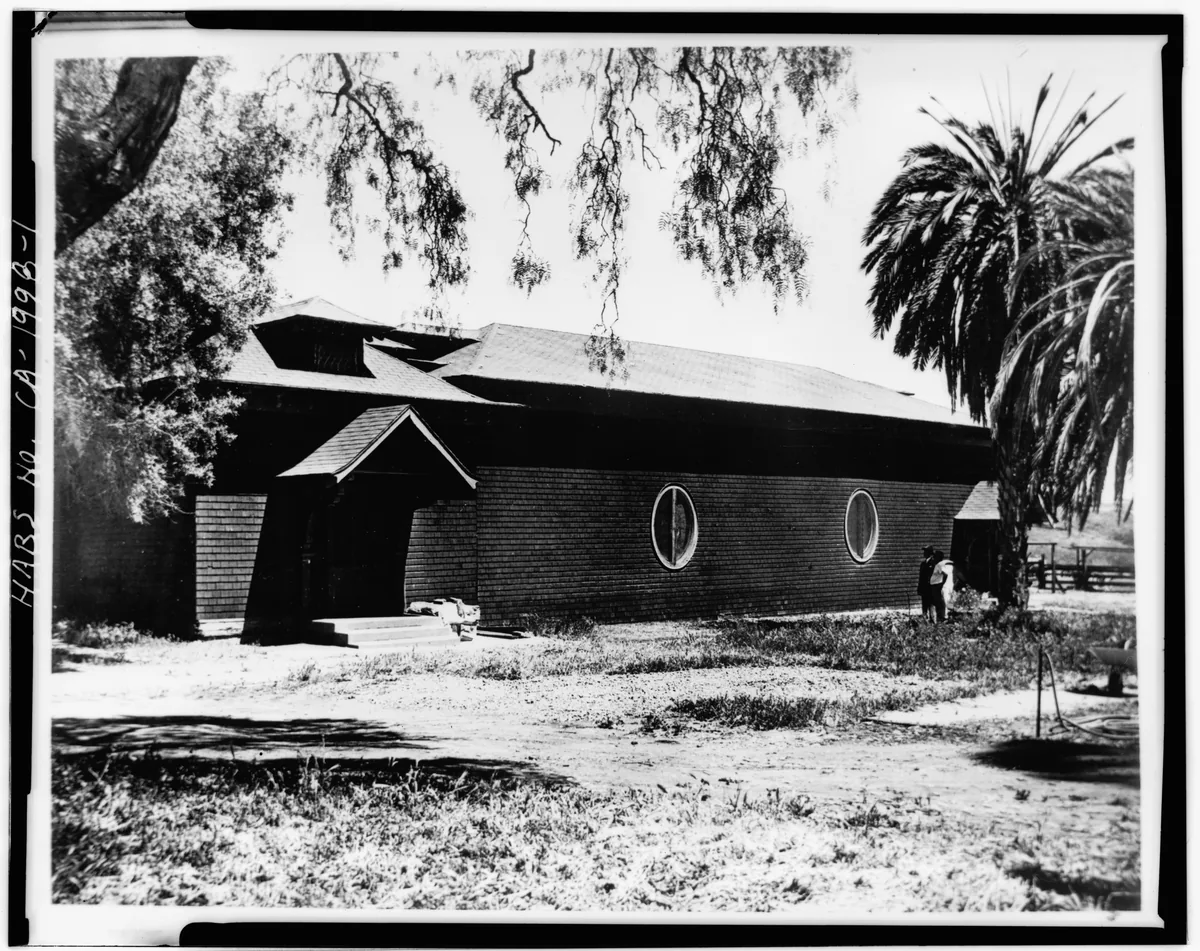
The Silent Concert Hall: Granger Music Hall, National City
⌖ National City, California
A small redwood concert hall where some of the world's great violinists once played sits boarded up behind a fence on East 4th Street. It is one of the rarest surviving works of architect Irving J. Gill, and it has been silent since 2008. Colorado silver magnate Ralph Granger had the hall built in 1898 at his National City estate, to a design by the young Irving J. Gill. It housed his violin collection and hosted private concerts. Granger later expanded it into an 80-by-30-foot auditorium with a 75-foot ceiling mural of Euterpe, the muse of music, and a Murray Harris pipe organ behind a carved cedar screen. Pianist Mark Hambourg, violinist Alexander Petschnikoff and Eugène Ysaÿe performed there. The Granger estate burned in 1906. In 1969 the land was sold for apartments, and the National City Historical Society moved the hall in two sections to East 4th Street, on City land leased for $1 a year. The hall was listed on the National Register of Historic Places in 1975. After 39 years of weddings, quinceañeras and community events, the hall closed in 2008 when roof repairs were needed. A City plan to buy it for $10 and move it to the Port never went ahead, and the hall has stayed closed since (NCHS). SOHO's 2026 Most Endangered list describes it as "vacant, boarded up, fenced off, and deteriorating." SOHO inspected it and prepared a condition assessment in 2025. NCHS is petitioning the City for a lease to restore it in place.
◯ General area onlyOpen case file →Boulders and Honky-Tonk: Big Stone Lodge, Poway
⌖ Poway, California
Granite boulders the size of cars and enormous timber beams make up a 1920s roadside resort that served Poway as a dance hall, restaurant and country-western bar for decades. It has stood empty for more than 20 years. After the Poway–Escondido stagecoach line stopped running, Dr. Homer Hansen and Daniel Stuck bought land along Old Pomerado Road in the 1920s and planned a resort in an oak grove. A gas station opened in 1925, followed by the Big Stone Lodge with its dance hall and bandstand, and a restaurant and bar around 1930. The buildings use huge granite boulders, thought to come from nearby hillsides, and gigantic roof beams. The full resort was never built, but the lodge was a popular roadside stop and local social center for decades. The lodge declined after Old Pomerado Road / Highway 395 was straightened in the 1990s, which hid it from passing traffic. By then it had a reputation as a rowdy country-western bar. Noise complaints from a new subdivision preceded its closure. Poway's Redevelopment Agency bought the property in 2003, and a 2005 historical evaluation recommended treating it as a historic district (SOHO). City-owned and deteriorating. In 2019 city officials said squatters regularly broke in and called the property a nuisance (10News). On Sept 15, 2026 the City Council voted unanimously to remove the parcel from its affordable-housing inventory and prepare it for a future passive park.
◯ General area onlyOpen case file →The Tower Nobody Could Use: 107 Ash Street (formerly 101 Ash), San Diego
⌖ San Diego, California
San Diego bought a 21-story former utility headquarters to bring city offices together. Weeks after staff moved in, asbestos forced an evacuation. The tower has stood empty for more than six years and became one of the city's most expensive real-estate scandals. The tower opened in 1968 and was the headquarters of SDG&E and later Sempra Energy. In October 2016 the City Council approved a lease-to-own deal for it. City employees occupied the building for only a few weeks in late 2019 and early 2020, until construction work dislodged asbestos and the City evacuated it. It has been vacant ever since. The broker who arranged the deal, Jason Hughes, had been paid a commission by the sellers. He pleaded guilty in 2023 to a misdemeanor conflict-of-interest charge and agreed to repay $9.4 million. The City settled the related lawsuits in 2022 and took ownership. Vacant, with a "No Trespassing" sign. In 2025 the Council approved a ground lease to convert the tower to housing. On Sept 15, 2026 it amended the deal: 252 units, 249 of them affordable, plus retail and childcare space. The building has been renamed 107 Ash Street.
◯ General area onlyOpen case file →The Day the Playground Fell In: Garrison Elementary, Oceanside
⌖ Oceanside, California
Behind a fence on Garrison Street, the classroom buildings of a former elementary school wait out their last years. For half a century this was E. G. Garrison Elementary. Then, in the winter of 2019, the ground behind the school opened up. The campus was planned in 1966 as "Loma Alta Elementary" and designed by architect Samuel Wood Hamill, FAIA. Construction began in September 1969, and the school opened in 1970 under a new name honoring Elra G. Garrison, a longtime district business official. Portable classrooms were added in 1985, 1990 and 2016. In February 2019 a sinkhole opened at the rear of the campus. A second appeared on the blacktop in May. Engineers traced them to a failing storm-drain system and estimated about $13 million for repairs. Students were moved out in August 2019. In April 2020 the school board voted 4–1 to close Garrison permanently, and it was declared surplus that June. City and state environmental documents from 2025 describe the site as "ten abandoned school structures." The Planning Commission approved a 140-townhome project 5–0 in August 2025, and the City Council approved it on December 3, 2025. Construction is expected to begin around 2027. A 2024 historical report found the campus not eligible for the California or local historic registers. Its condition since August 2025 has not been verified.
◯ General area onlyOpen case file →Twenty Years in the Dark: The Vogue Theatre, Chula Vista
⌖ Chula Vista, California
For six decades the neon of the Vogue marked downtown Chula Vista's night out: first dates, family movie nights and dollar Tuesdays. The doors closed in 2006, and the theater has sat dark on Third Avenue ever since. The Vogue opened on January 19, 1945. It was a poured-concrete, single-screen theater designed by architect Frank Hope Jr. It became a South Bay gathering place, known for cheap triple features and low-cost promotions. The City designated it a historical resource in 2011. The Vogue closed in July 2006. Its final triple feature reportedly drew fewer than 50 moviegoers. Several later revival plans, including a 2019 concert-venue conversion, stalled and never opened. Vacant for about 20 years. In May 2026 the City of Chula Vista announced it had acquired the theater and the adjacent parking lot through a settlement with the former owner. The long-term vision is a performance venue.
◯ General area onlyOpen case file →Gold, Debt and Silence: Stonewall Mine and Cuyamaca City
⌖ Julian, California
High in the Cuyamaca Mountains, cut-stone foundations and scattered machinery mark where a 19th-century gold mine and its company town once stood. Gold was discovered here in 1870, and the Stonewall Mine was worked until 1892, when debt and foreclosure ended operations. Workers lived in Cuyamaca City, a small town with cottages, a store, a post office, a school and a boarding house. The mine closed in 1892. Today collapsed pits, foundations, tailings and scattered machinery remain. Interpretive ruins inside Cuyamaca Rancho State Park, with ongoing archaeological study by California State Parks.
◯ General area onlyOpen case file →City of Wood: Camp Callan, Torrey Pines
⌖ San Diego, California
For five years during World War II, a wooden city of soldiers stood on the mesa above La Jolla. Then it was taken apart board by board, and its lumber went into San Diego's postwar homes. Camp Callan opened on January 15, 1941 as a U.S. Army anti-aircraft and coast-artillery replacement training center, on land the City leased for $1 a year. At its peak it covered about 1,283 acres and nearly 300 buildings. The Army declared the camp surplus on November 1, 1945. The City bought about 500 wooden buildings for $200,000 and sold the lumber to returning veterans and others during the postwar shortage. This became known as "ghost lumber." Few traces of the camp remain today.
◯ General area onlyOpen case file →The Radar Station the Forest Took Back: Mount Laguna Air Force Station
⌖ Mount Laguna, California
For decades a Cold War radar base watched the skies from the Laguna Mountains. After the Air Force left, its buildings slowly fell apart, until the Forest Service cleared them away. Mount Laguna Air Force Station was an Air Defense Command radar station. The U.S. Air Force stopped operating it in 1981. The Forest Service later described the abandoned buildings as severely deteriorated and vandalized, with asbestos and collapse hazards, and evidence that transients were living there. On July 8, 2009 the Descanso Ranger District signed a decision to remove the buildings and hazardous materials and restore the landscape. The Forest Service lists the project as completed.
◯ General area onlyOpen case file →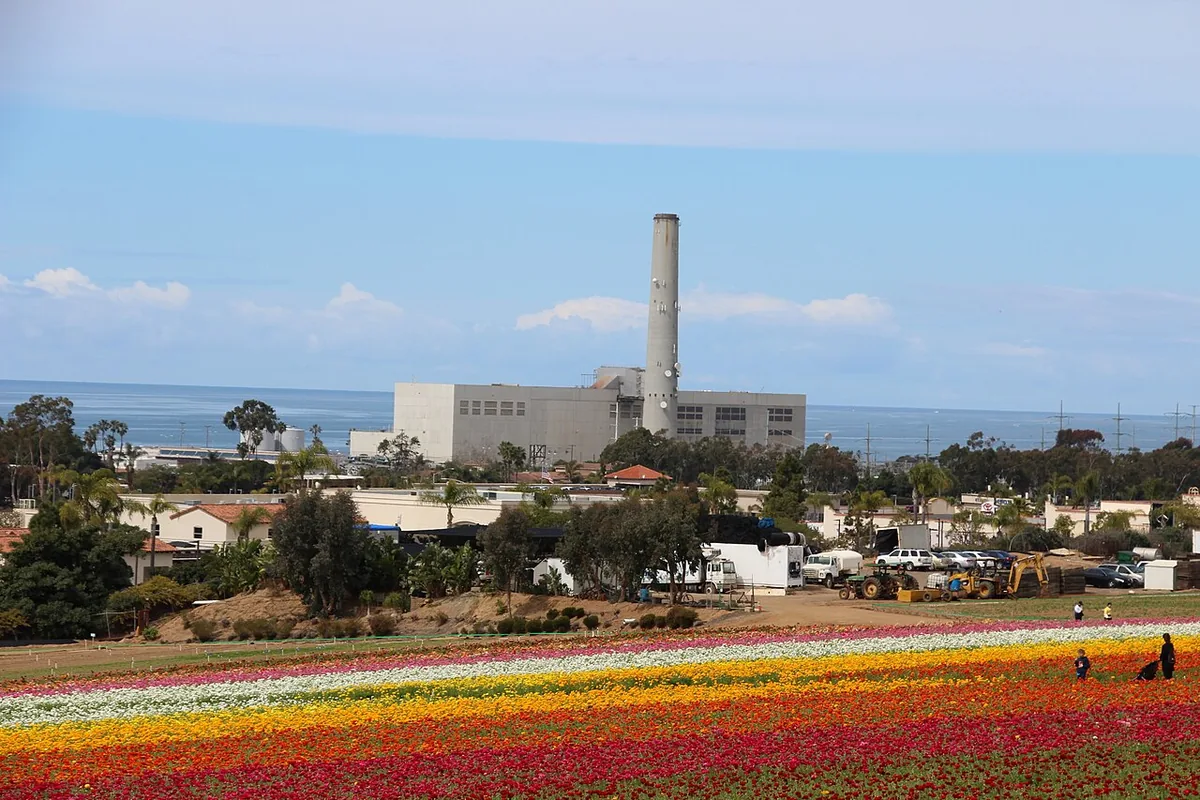
The Stack Comes Down: Encina Power Station, Carlsbad
⌖ Carlsbad, California
For decades a 400-foot smokestack was the landmark of the Carlsbad coast. Now the old power plant is gone. The Encina Power Station was a fossil-fuel plant on Agua Hedionda Lagoon. It was retired on December 11, 2018, after a smaller replacement plant was approved. According to the City of Carlsbad, NRG substantially completed demolition of the old plant in 2022, with final completion in 2025. The land is privately owned by Cabrillo Power I LLC (an NRG subsidiary). The City's General Plan calls for open space and visitor-serving commercial uses there.
◯ General area onlyOpen case file →Where the Dragsters Ran: Carlsbad Raceway
⌖ Carlsbad, California
For forty years the roar of dragsters and motocross bikes echoed across the hills east of Carlsbad. Today the site is a business park. Larry Grismer and Sandy Belond bought the land in 1961 and opened Carlsbad Raceway in 1964, with a quarter-mile dragstrip and a motocross track. The land was sold in 1986, and the raceway continued on a month-to-month lease. Motorsports ended in August 2004 when the owners decided to develop the land. The Carlsbad Raceway Business Park was built at the northeast corner of Palomar Airport Road and Melrose Drive.
◯ General area onlyOpen case file →