
Historical residential sites
Former homes, museum residences, and historical residential sites. No currently occupied private homes are listed. General-area locations protect privacy and never authorize entry.
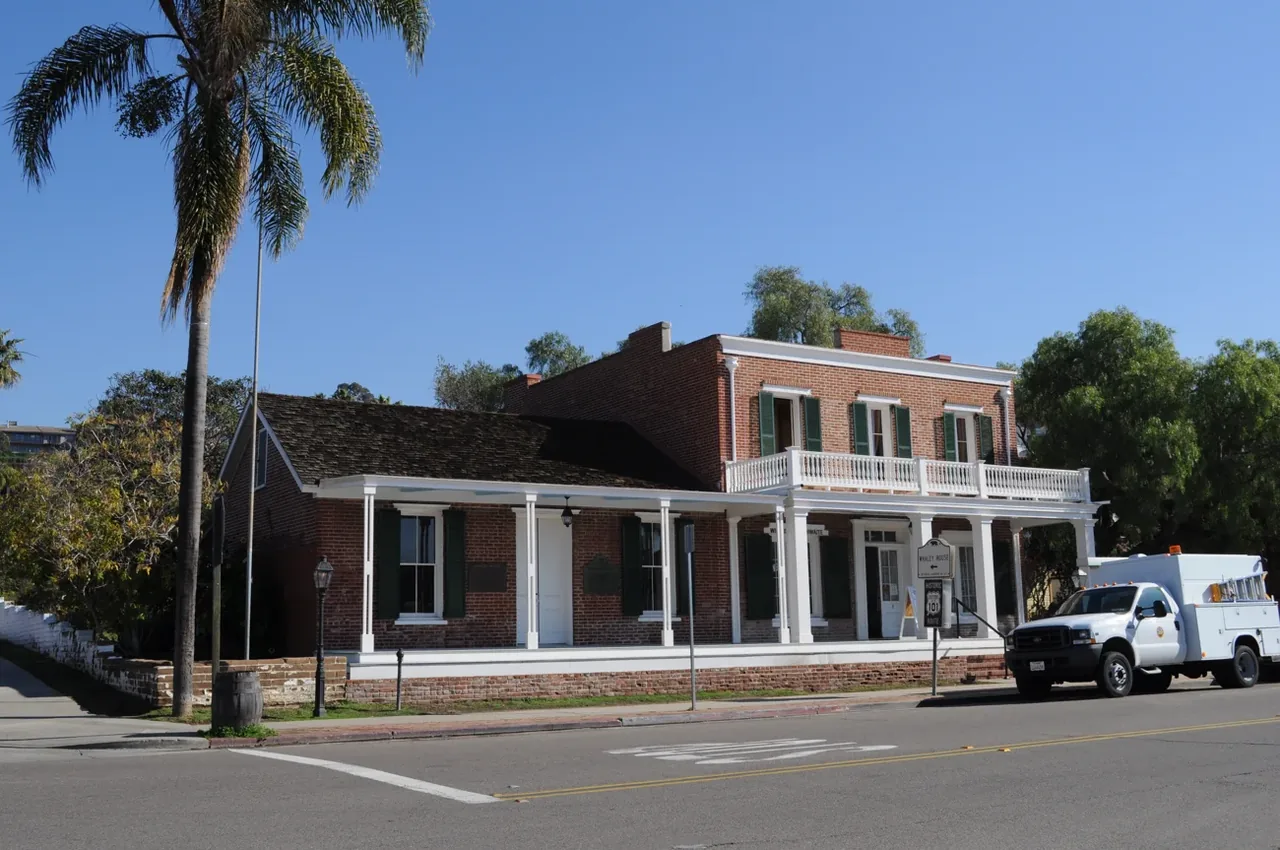
Whaley House
⌖ San Diego (Old Town), California
Completed in 1857, the Whaley House brings several chapters of Old Town San Diego into one brick building. Thomas Whaley designed the Greek Revival home and used bricks from his own brickyard. The County of San Diego identifies it as the city's first two-story brick building; it is also California Historical Landmark No. 65. County history · Landmark record The building was more than a family residence. Its rooms accommodated a general store, San Diego's first commercial theater in 1868, and the county courthouse. Whaley and Philip Crosthwaite opened their store here in 1869. Family loss also belongs to its documented history: Thomas and Anna's infant son died in 1858, and their daughter Violet died in 1885. These events are distinct from the house's later ghost traditions. SOHO history Frank Whaley returned in 1909 to restore the aging building and show it to visitors. After a preservation campaign, the County purchased the house in 1956; the museum opened in May 1960. Today it remains a county-owned museum offering daytime self-guided visits and reserved evening guided tours. Preservation history · Current tickets
Open case file →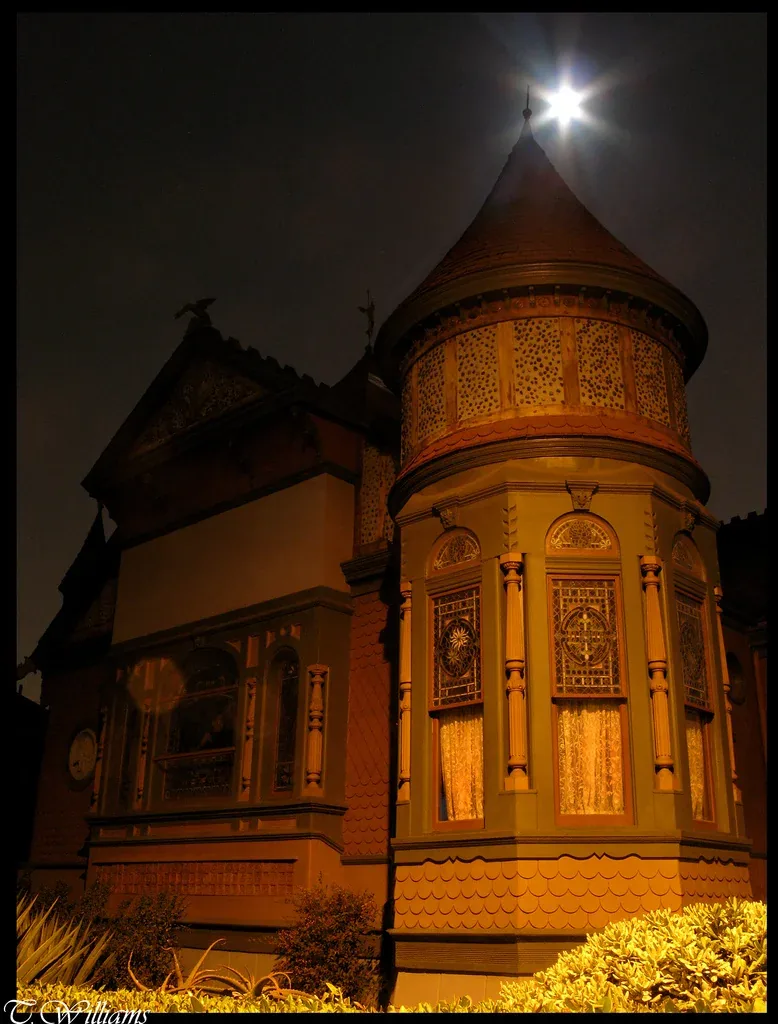
Villa Montezuma
⌖ San Diego (Sherman Heights), California
Villa Montezuma is an 1887 Queen Anne house museum in San Diego's Sherman Heights, built for pianist, vocalist and writer Jesse Shepard. Architects Comstock and Trotsche gave the house an elaborate Victorian design, with pictorial and patterned colored glass central to its character. Shepard later wrote under the name Francis Grierson; the Historic American Buildings Survey records both careers and the building's architectural significance. The house was more than a showpiece. Shepard hosted invited musical gatherings and developed his literary career here before selling the Villa in December 1889. Historian Clare Crane's documented account also challenges sensational stories about his patrons and distinguishes his spiritual interests from claims that the house served as a séance business. Preservation efforts saved the building in the 1960s, and it opened as a museum in November 1972. A 1986 fire led to restoration and reopening in 1987. Today the City owns the museum and the Friends of the Villa Montezuma operate it. The operator's current guidance confirms guided weekend tours during ongoing restoration, with advance reservations. The grounds are not freely accessible, and interior photography is prohibited.
Open case file →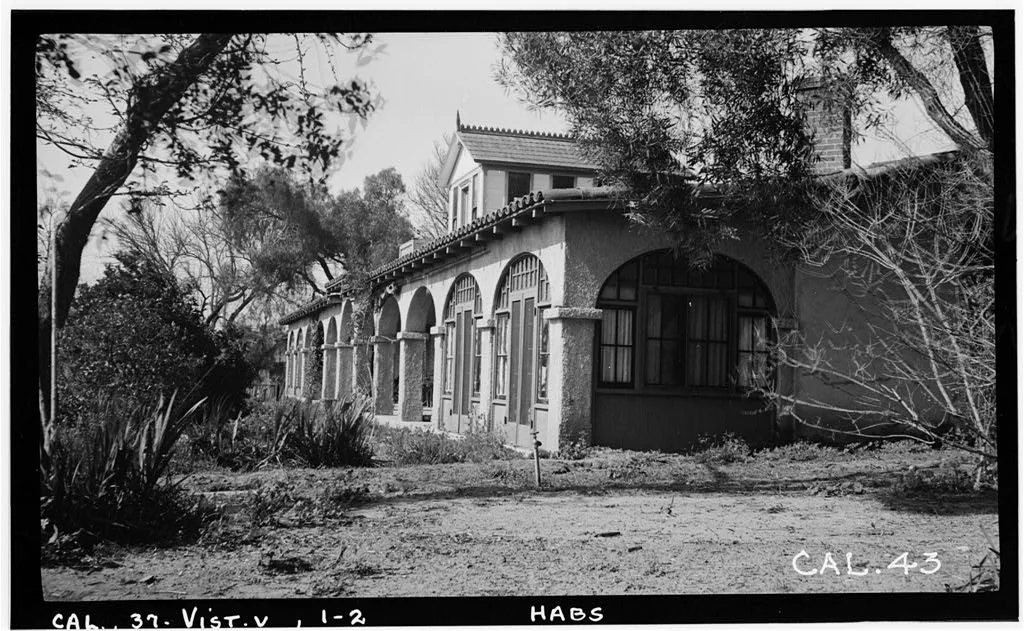
Rancho Guajome Adobe
⌖ Vista, California
Rancho Guajome Adobe preserves a hacienda built in 1852–53 on land once associated with Mission San Luis Rey. The Mexican government granted the rancho to Luiseño brothers Andrés and José Manuel in 1845. After the land passed to Abel Stearns, he gave it to Ysidora Bandini as a wedding gift when she married Cave Johnson Couts in 1851. The family moved to the ranch in 1853. Architectural history traces that transition from mission lands to a ranching household. The 28-room adobe contains two courtyards, an arcaded veranda and a chapel. Its construction and operation depended on Luiseño labor; The Cultural Landscape Foundation describes the workers as indentured. The familiar arched façade was added in the 1920s, rather than belonging to the original 1850s design. These layers make the building a record of changing architecture as well as an unequal ranching society. Recognized as a National Historic Landmark in 1970 and acquired by San Diego County in 1973, the adobe is now a public museum within a county park. The County operator offers self-guided visits during museum hours and guided tours by advance appointment. Reported hauntings belong to attributed folklore, not the documented history of the building.
Open case file →María Merced Williams & John Rains House (Casa de Rancho Cucamonga)
⌖ Rancho Cucamonga, California
Built in 1860–1861, this brick ranch house preserves a history of hospitality, inherited wealth and contested control of land. María Merced Williams and John Rains moved here from Chino with their children in spring 1861. Bricks made from local red clay formed the walls, while water passing beneath the house helped cool it. The county museum's history describes a home arranged around a patio and a rancho expanding its vineyards. In November 1862, John Rains was murdered while traveling toward Los Angeles near present-day San Dimas—not at this house. The killing remained unsolved. Merced then faced a struggle over her property: independent historical reporting describes pressure to surrender control through a power of attorney, followed by a successful court challenge. Debt and foreclosure nevertheless cost her the rancho. Later owners repaired and altered the building, but vacancy and vandalism eventually threatened it. Community preservation efforts helped bring county acquisition in October 1971. Today it operates as a public historic house museum. Its 2022 renaming restored Merced's name to the site's public identity, recognizing her place in a history often told chiefly through her husband's death.
Open case file →Garcia-Pryor House (O'Neill Museum), San Juan Capistrano
⌖ San Juan Capistrano, California
The O'Neill Museum preserves a different side of San Juan Capistrano's past: a wooden family home rather than a mission adobe. The Historical Society dates its construction to 1870–1880, when saloon owner Jose Garcia built it for his wife, Refugio Yorba. It was one of the town's first frame houses. Originally elsewhere in town, it later became the Pryor family home; the Society records their residence through 1955. Garcia was killed in the 1890s, but the consulted accounts disagree on the year. The house should not be presented as the scene of that killing. The Cornwell family donated the building to the Society in 1976. It was moved to Los Rios Street, restored and furnished with period furniture. O'Neill family support helped fund the work, and the museum honors Marguerite O'Neill. Its value extends beyond the rooms: it is also the Society's headquarters and archival center. In 1994, the Los Angeles Times reported that 53 photographs from a local family's album had been reproduced for the collection and were being displayed here. Today the operator welcomes museum visitors during its published hours. The porch-and-cigar ghost story belongs to local folklore, not the documented explanation of the building's survival.
Open case file →Workman House, Homestead Museum
⌖ City of Industry, California
The Workman House preserves the history of a California rancho family whose fortunes rose with cattle ranching and fell with banking. William Workman began the adobe home in 1842; later remodeling gave it the appearance of an English manor house, according to California’s landmark record. The house’s story reaches beyond one tragic event to the changing economy of greater Los Angeles. The Temple and Workman bank, co-owned by Workman and his son-in-law F. P. F. Temple, closed permanently on January 13, 1876. Workman died by suicide on May 17. Museum historian Paul R. Spitzzeri reconstructs the event from contemporary newspapers. Their explanations of his motives remain historical interpretations, not certainty about his private thoughts. The property did not simply disappear after the collapse. Family members retained the house and surrounding acreage into the late nineteenth century, and Walter P. Temple bought it in 1917. After later institutional uses, city acquisition and restoration, the Homestead Museum opened in 1981, as the National Park Service recounts. Today it is a public historic museum, not a private residence. The museum’s current visitor information requires guided tours for ordinary house visits.
Open case file →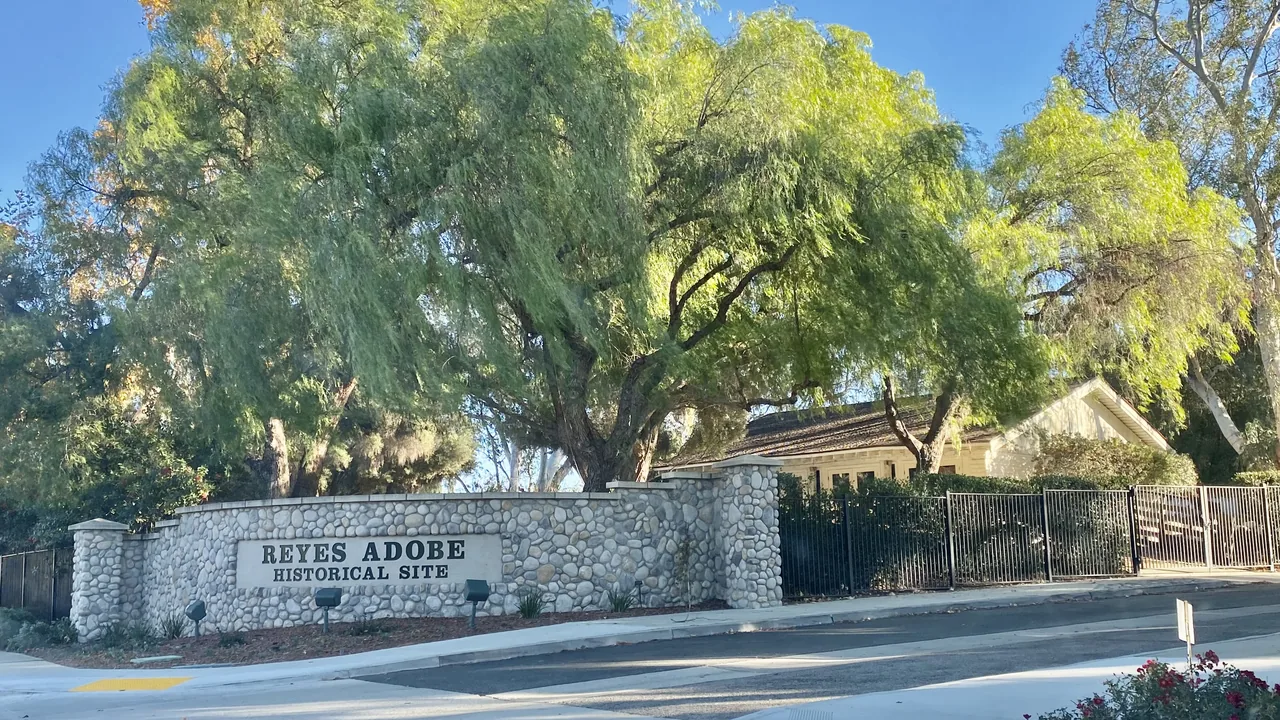
Reyes Adobe Historical Site, Agoura Hills
⌖ Agoura Hills, California
Reyes Adobe preserves a family home from California’s rancho era inside a city-run historical site. The City of Agoura Hills dates its construction to about 1850 and credits Jose Paulino Reyes. His mother, Maria Antonia Machado, had purchased Rancho Las Virgenes in 1845. Today, furnished rooms interpret different periods of the family’s life, while the former barn displays artifacts, photographs and the property’s history. City history · Museum interpretation The building survived successive owners and repeated preservation campaigns. Malcolm McKenzie repaired it after buying the property in 1935. The city acquired the site in 1983, but earthquake damage in 1994 delayed plans to open it. A later rehabilitation culminated in the public opening on October 16, 2004. These changes make the adobe a record of both nineteenth-century domestic life and twentieth-century efforts to preserve it. The Acorn · Contemporary earthquake report · City chronology The city currently offers self-guided tours on limited opening dates. Its museum access should not be confused with unrestricted entry to a former home. Official visitor information
Open case file →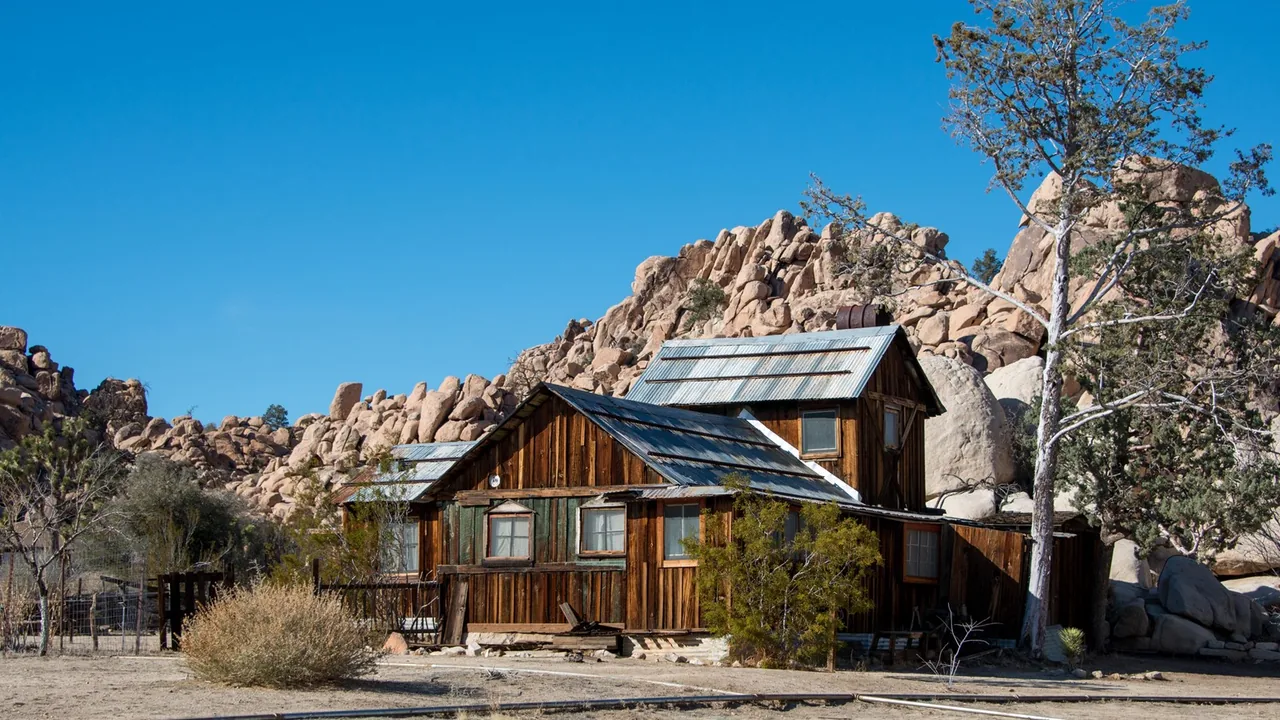
Keys Ranch (Desert Queen Ranch), Joshua Tree National Park
⌖ Joshua Tree National Park, California
Keys Ranch preserves a family homestead whose history reaches well beyond a famous shooting. Bill Keys filed a homestead claim in 1917; Frances Lawton Keys helped sustain the desert household through gardening, livestock care, preserving food, teaching and selling goods. Mining and ranching were only part of the work that made this isolated place viable. The National Park Service's history gives Frances a central role in that achievement. Frances Lawton Keys, NPS On May 11, 1943, Bill Keys shot and killed Worth Bagley during a longstanding dispute. Keys said he acted in self-defense; a jury convicted him of manslaughter. He received a ten-year sentence, was paroled in 1948 and returned to the ranch. Accounts agree that he later received a pardon but differ on its year. The killing should not overshadow the family's decades of work here. Advocate, 2022 Today the ranch is a protected historic site in Joshua Tree National Park. Admission is limited to reserved ranger-led tours, not independent exploration. Its value is documented history; this profile makes no supernatural claim. NPS ranch tours
Open case file →Newhall Ranch House, Heritage Junction
⌖ Santa Clarita, California
The Newhall Ranch House survives at Heritage Junction in William S. Hart Park, but its history began elsewhere. The historical society describes a small predecessor traditionally associated with Thomas R. Bard's 1865 purchase of Rancho San Francisco; the surviving Victorian house took its larger form in the 1890s. Its earliest construction date is uncertain. It became a home for the ranch foreman and accommodated visiting company officials until 1973. Operator history Margaret Routledge, wife of the ranch manager, died there on January 24, 1916. The local archive reproduces a death record that could not determine whether the shooting was suicide or accidental. An unidentified contemporary newspaper also discussed murder as a possibility, without establishing it. These records document an unresolved death, not a proven homicide or a supernatural explanation. Archived records In August 1990, preservationists moved the house to Heritage Junction in two sections over two nights. Contemporary reporting describes the building arriving safely after a narrow bridge interrupted the move. That rescue, independently reported by the Los Angeles Times, is an important part of the house's story alongside the later ghost folklore. Contemporary report
Open case file →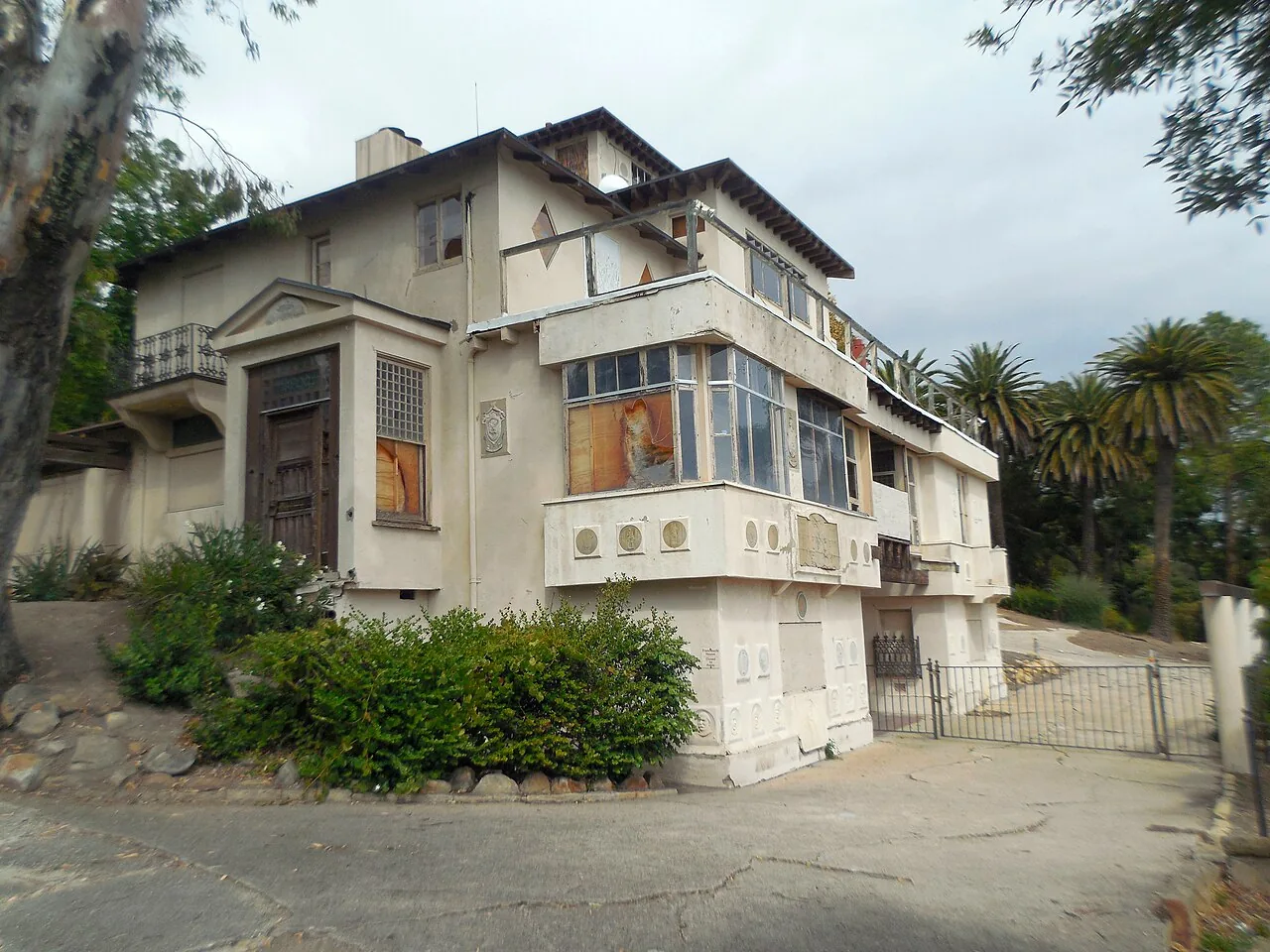
Franceschi House (Montarioso)
⌖ Santa Barbara, California
Franceschi House began as a redwood Craftsman home, not a stucco villa. Horticulturist Francesco Franceschi built it in 1905 and named the house and surrounding botanical garden Montarioso. His garden and nursery operated here from 1903 to 1913, helping introduce hundreds of plant species to Southern California. Philanthropist Alden Freeman later transformed the house, covering its redwood siding with stucco and adding 85 plaster medallions. Their subjects included Jane Addams and Mary Wollstonecraft. In 1931, Freeman donated the property to Santa Barbara for public parkland. The house became a place for teaching and music. Peter Riedel’s vocational horticulture program used it for classrooms in 1934; the WPA symphony orchestra used it for offices and rehearsals in 1941. Later deterioration prompted repeated preservation efforts. In 2018, the City Council voted to replace the house with an open-air space honoring its history.
◯ General area onlyOpen case file →Gilman Ranch and Jose Pope Adobe, Banning
⌖ Banning, California
On September 26, 1909, William Mike was shot and killed at Gilman Ranch in Banning. The Mike family had come for seasonal orchard work, and Willie Boy was also employed at the ranch. The killing set off a manhunt for Willie Boy. The story took different forms in the years that followed. Clara True's 1909 report described a deliberate shooting and claimed that Willie Boy later killed Carlota Mike and himself. Later historians dispute those claims; the shooting's circumstances, who killed Carlota and Willie Boy's ultimate fate remain contested.
◯ General area onlyOpen case file →McKinley Mansion, Los Angeles
⌖ Los Angeles, California
Built in the 1910s, Los Angeles's McKinley Mansion had 20 rooms and 13,000 square feet of space. Maytor H. McKinley purchased the house in 1945. The city designated it a Historic-Cultural Monument on September 9, 1987. An aborted demolition attempt followed in 1988, according to contemporary Los Angeles Times reporting. On May 23, 1994, fire destroyed the mansion. Two people were found dead, one on the second floor and another in the attic. Their identities, the causes of their deaths and the cause of the fire were not immediately determined. By 1995, neighborhood groups were proposing a community center, housing and gardens for the former mansion site. These were plans, not completed projects. The Pacific Coast Architecture Database dates the final demolition to about 1995.
◯ General area onlyOpen case file →